PC #1: To act as a professional who is inheritor, critic and interpreter of knowledge or culture when teaching students.
As a Mi’gmaq educator in a Mi’gmaq teaching context, I believe that it is of the utmost importance that while being professional I instil a strong cultural background to all the knowledge building I engage in with my students. Having read and learned from Mi’gmaw scholars, I believe that I’m able to incorporate Indigenous Knowledge consistently throughout my time as an educator. Dr. Marie Battiste and Dr. Fred have been just a couple of the professionals that I’ve learned from and continue to be a critiquer of knowledge because of. I’ve also learned how to read non-Indigenous research and listen to scholars who may not be preoccupied with the difference between teaching in a culturally-sensitive and rich environment and a western-based environment. This is where having a critical awareness about what we allow to become part of our learning is essential in order to create an Indigenous-centred place of discovery and learning. We no longer can afford to just pass on knowledge without assessing the serious implications of passing on knowledge that will prioritize western over Indigenous.
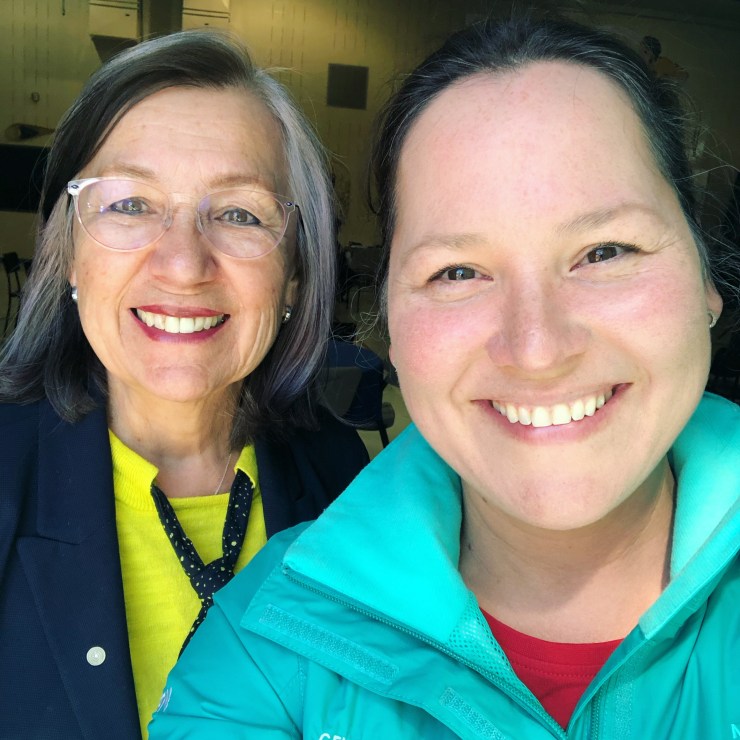 Photo above: Dr. Marie Battiste at the FNEC education symposium in Gesgapegiag, Quebec on May 1, 2019. My second time hearing her speak at an event.
PC #2: To communicate clearly in the language of instruction, both orally and in writing, using correct grammar, in various contexts related to teaching.
I have worked towards fluency in the Mi’gmaq language since the age of 8. I have continued to learn the morphology of Mi’gmaq in order to become a more skilled teacher in an immersion setting. My hope and wish for our language is for every child to begin their educational journeys in the language of their territory before introducing mainstream languages. Being trilingual also gives me the strength to continue to be an advocate for Mi’gmaq and to continue to carry the language and share with the future generation.
Having learned Mi’gmaq at the age of 8, I have great insight as to how Mi’gmaq can be transferred in the home and in the classroom. I was raised in an immersion method at home and during some class time at school during my learning process. I had only attended school in French and lived with a French family from the age of 2 until 8, so I remember vividly some of the thought processes that occurred during my immersion phase. This understanding of how my own brain worked to acquire a level of fluency in a short amount of time has helped me participate in field experiences that have been in the Mi’gmaq language. I plan to continue on this path.
PC #3: To develop teaching/learning situations that are appropriate to the students concerned and the subject content with a view to developing the competencies targeted in the program of study.
During my 3rd field experience, I always tried to keep in mind that learners have different intelligences and that one way of teaching new knowledge may not work for all. One specific lesson that I conducted in math that was teaching shapes, the reproduction of the shapes, the proper names of them in Mi’gmaq and how to recognize these shapes in their everyday surroundings.
Below is a lesson plan example of a lesson that continued to develop prior knowledge while building new knowledge by extending with new concepts.
PC #4: To pilot teaching/learning situations that are appropriate to the students concerned and to the subject content with a view to developing the competencies targeted in the programs of study.
One lesson that I conducted with the class during my FE3 was one on the body parts and their names. What we have to keep in mind here is that students in immersion programs often do not have access to the language anywhere else other than the classroom setting. So there are some basic vocabulary lessons that need to be reviewed in different ways and scenarios. The first part of this unit was to showcase the different parts of the body in a Quizlet online flashcard bank. Then students had to play “Miss Karen teluet…” which translates to “Miss Karen says…” (A Simon says derivative).
The following lesson was the students transferring their knowledge of their bodies to a blank cutout of a body that they then had to wait for directives as to what to draw. We started with the eyes, nose, mouth, etc. The surprising thing about this activity was the level of cooperative learning that was happening. If a student was unsure of what was being said, they quickly turned to their neighbour and asked for helped, they also commented to each other on their work and encouraged each other along the way. This was one of the lessons that didn’t have teamwork incorporated into it, but ended up being a powerful way to teach collaboration.
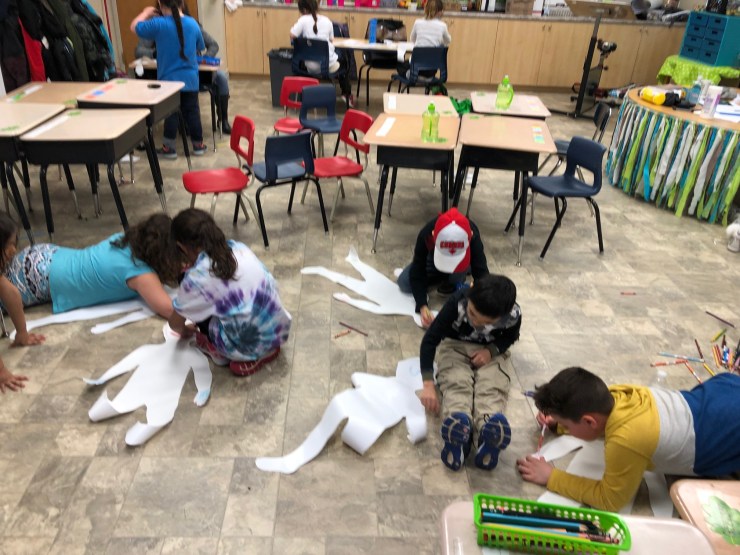 Image above: Grade 1-2 Mi’gmaw immersion students extending their knowledge of the names and places of the different parts of their bodies.
PC #5: To evaluate student progress in learning the subject content and mastering the related competencies.
I believe that the strongest way to have students demonstrate what they understand is to “show” their answer using manipulatives. I enjoy using manipulatives in my classroom because it allows me to see instantly if a student has understood a concept or not. I make notes, develop some review strategies and usually ask early finishers to support their classmates by explaining the concept in their own words. Likely, it was the way it was explained or shown, and this can be adjusted once I can understand where the concepts are not in line with what the outcomes of the lesson. Fellow students do a better job at re-explaining a concept. We work together on these tasks so that I can see the rationale behind their thinking. Sometimes asking a question helps us to see how we can support them additionally.
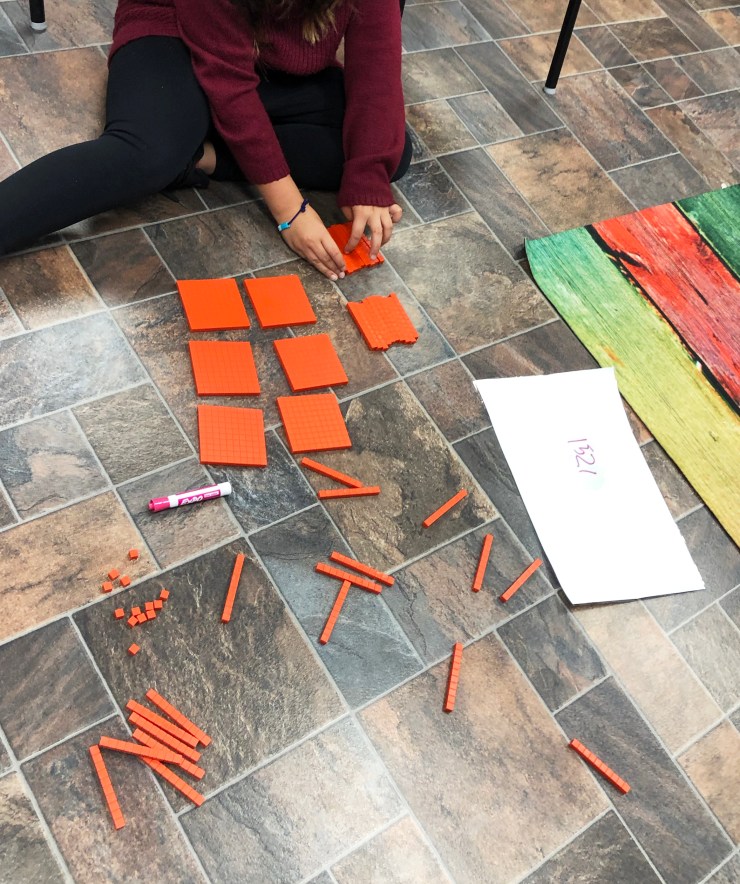 Photo above: Student uses “Ten Rods” to build a number with ones, tens and hundreds. I call these “live assessments”. Confirming with manipulatives over and over that concepts are mastered.
PC #6: To plan, organize and supervise a class in such a way as to promote students’ learning and social development.
As Mi’gmaq people, I believe that learning things makes us who we are and who we become. Our Mi’gmaq school is the perfect place to reinstill what it means to be Mi’gmaw. A big part of this, is ceremony. Sometimes doing good work is ceremony. Sometimes, being peaceful for 5 minutes is ceremony. It is through ceremony that all knowledge can enter our conscious minds in a good way and this was my opportunity to connect the students to each other and to who they are. To do this, I created a safe space for smudging to happen before the start of everyday. This was our ceremony, and this promoted their learning and social development, which is in line with their holistic growth.
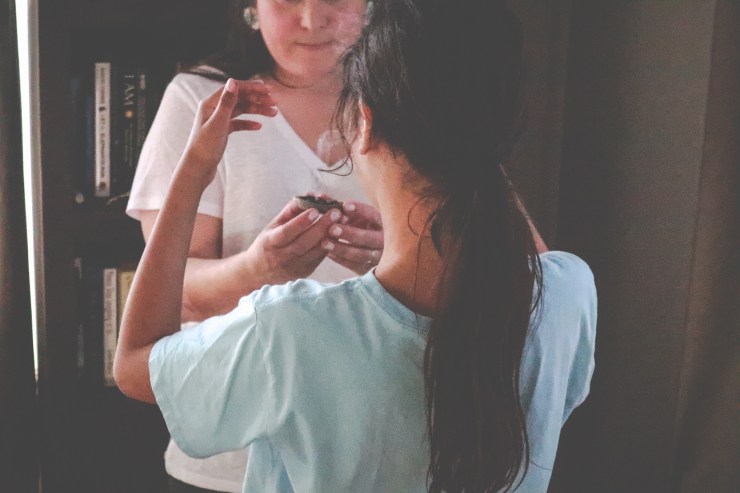 Above photo shows how we start every day, with a smudge to cleanse and pray for a good day of learning and growing.
PC #7: To adapt his or her teaching to the needs and characteristics of students with learning disabilities, social maladjustments or handicaps.
Developing IEP’s with other educational supporting staff is essential. This is why, I’ve made it a priority to learn to do this for Mi’gmaw Immersion students as our realities are different in some ways. One of the major differences is the language and this has been an obstacle for our program. Resources will have to be developed over time, and this will happen with time. I’ve just begun working with our school’s support system to find ways to support our students’ with exceptional learning.
https://docs.google.com/document/d/1fKLKTLsm6Ba2ZcWMCRLkaukxbb6ozXyEeZHZsuU-0pM/edit
PC #8: To integrate information and communications technologies (ICT) in the preparation and delivery of teaching/learning activities and for instructional management and professional development purposes.
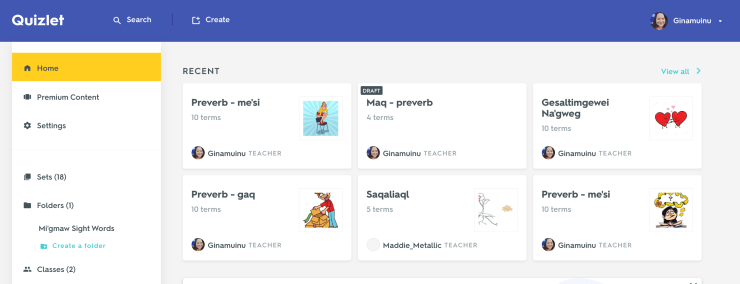
I often used Quizlet as a tool to teach Mi’gmaq. It proved effective and the students were already familiar with the platform. The great part of this online tool is that I was able to create my lessons from anywhere and anytime. I’ve since shared some lessons with those wanting to learn. My Quizlet username is “Ginamuinu”. You can find me at http://www.quizlet.com to learn more about some of the lessons I’ve created on there.
PC #9: To cooperate with school staff, parents, partners in the community and students in pursuing the educational objectives of the school.
Part of building a rich relationship with staff, parents, students, and partners of our school is to extend a hand outwards for others to reach out to us. I was hoping to be part of this when I took part in a keynote at the “2019 ‘Lnui’sultinej” conference along with Lola Vicaire and Marsha Vicaire. I shared as part of our presentation as a Mi’gmaq Curriculum Unit, how our immersion program has been successful in the hopes of inspiring others to begin their journey into Mi’gmaw Immersion programming. Since then, I’ve developed strong relationships with language warriors all over Mi’gmagi and we continue to support each other in our endeavors.
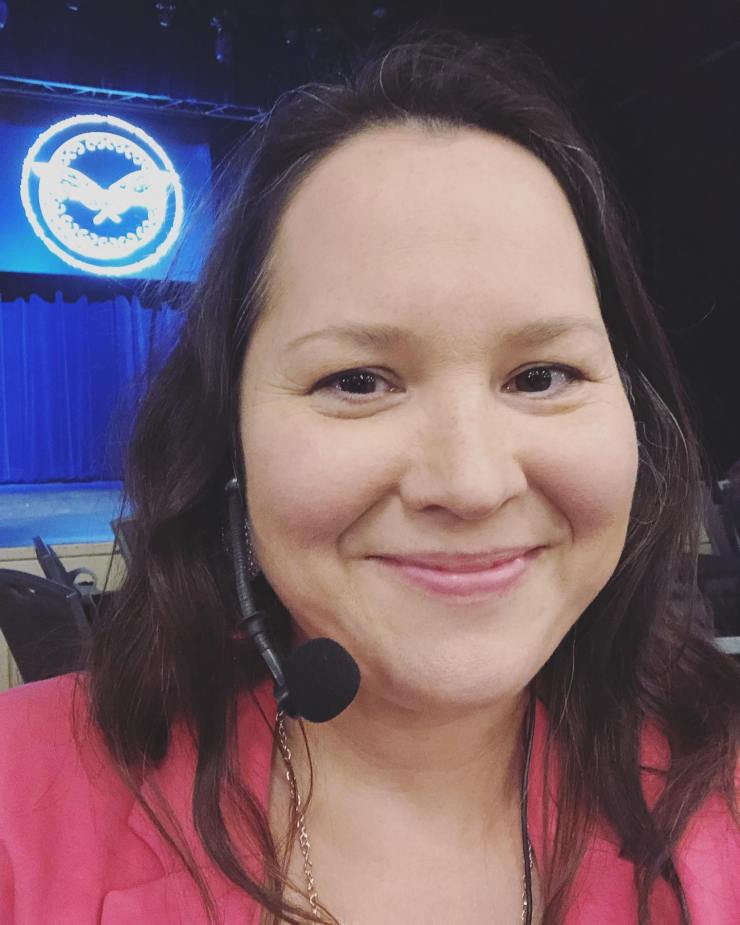 The image above is of me before going on stage to deliver a keynote entitled “Siawiminuignewa’tu’g ‘Gtli’sutiminu” in Membertou, Nova Scotia on May 17, 2019.
PC #10: To cooperate with members of the teaching team in carrying out tasks involving the development and evaluation of the competencies targeted in the programs of study, taking into account the students concerned.
Collaborating with fellow teachers in order to achieve collective goals while developing social development and altruism in our students is what a successful project means to me. The grade 1 Mi’gmaw immersion teacher and I began doing a co-reading project, whereas my grade 3/4 students would come and read to her grade 1/2 students. This was an initiative that evoked great learning, not only on the academic level, but on the social level also. It was a great way to connect the students to their younger school mates.
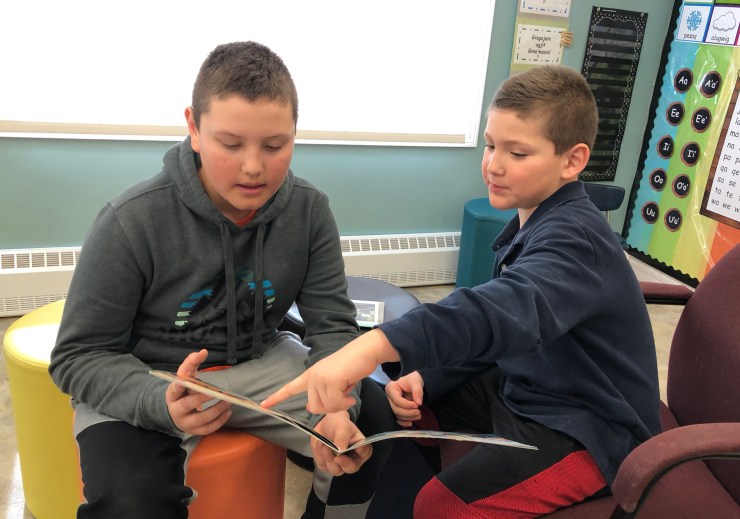 Photo above is part of a joint activity with Miss Maddie Metallic’s grade 1/2 Mi’gmaw immersion. An older student is reading to a younger student. Future educators in the making.
PC #11: To engage in professional development individually and with others.
The constructive feedback I received from my CT’s over the last 3 field experiences have given me the tools to know and understand how I can better serve students in my approaches and assessments. I’ve worked on better ways to assess prior knowledge, I’ve improved teacher timing, I’ve also had to work on classroom management and engagement.
I’ve also continued to build capacity and networking opportunities during the length of this program. Most recently I attended a Curriculum Design Symposium hosted by McGill University where educators from all over Turtle Island (present day Canada), shared and discussed what we are doing and how to move forward. How we can support each other and where and how we envision our communal resurgence in education.
Position Paper – 80915- SSHRC 612-2018-0058
PC #12: To demonstrate ethical and responsible professional behaviour in the performance of his/her duties.
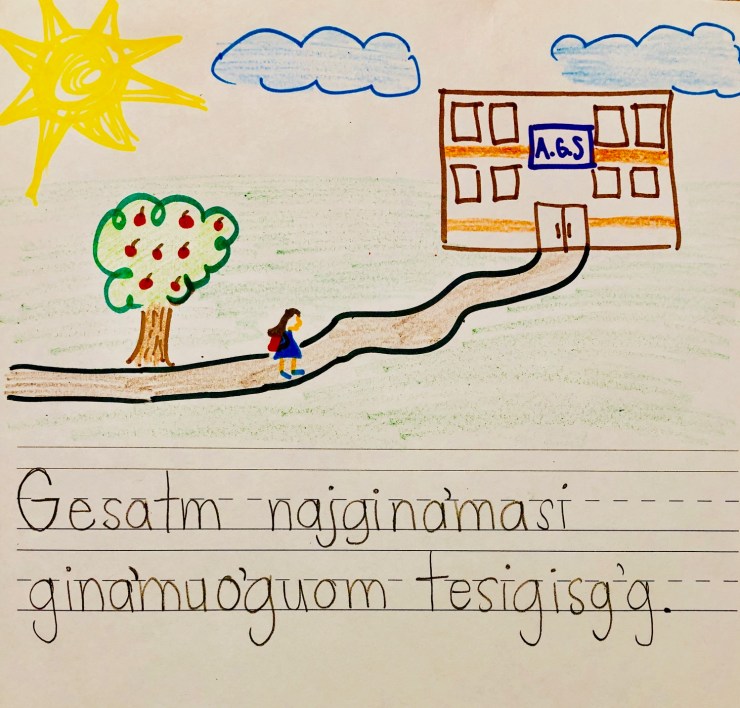
I often show an example of the expected work, and there was this one time that stands out for me when I asked the students to follow a rubric in order to ensure they had a strong journal entry. I made a sample journal entry, posted it to the smart board and then asked the students if they could see what I did well, and then what I could have improved on. I had to remain professional and not laugh too hard when they pointed out everything wrong with my journal entry. It was a fun exercise and showed me that they can sometimes rush through work without re-examining their effort and that constructive feedback is an important skill to learn and teach also.
 Karen Martin